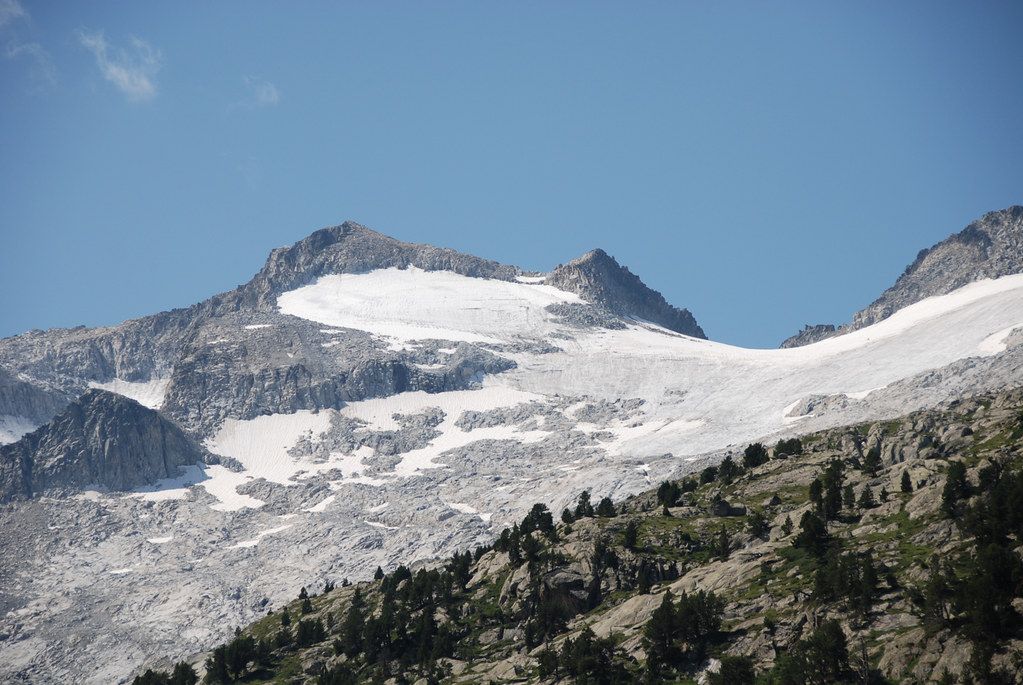
The highest point of the range
At about 3,404 metres, Aneto is the highest summit in the Pyrenees. It rises in the Maladeta massif in Aragon, above the Benasque valley, just south of the main ridge and only a few kilometres from the Val d'Aran as the crow flies. Its north side carries the largest glacier in the range, and its summit is a jumble of granite blocks topped by a metal cross.
Because it is the highest, Aneto draws people who would not normally climb a glaciated peak. That is the first thing to understand about it. The normal route is not technically hard by Alpine standards, but it crosses a glacier with crevasses, climbs steep snow or ice and finishes along an exposed ridge. Every summer brings accidents to people who underestimate it. If you do not have glacier skills, go with a qualified mountain guide (IFMGA/UIAGM).
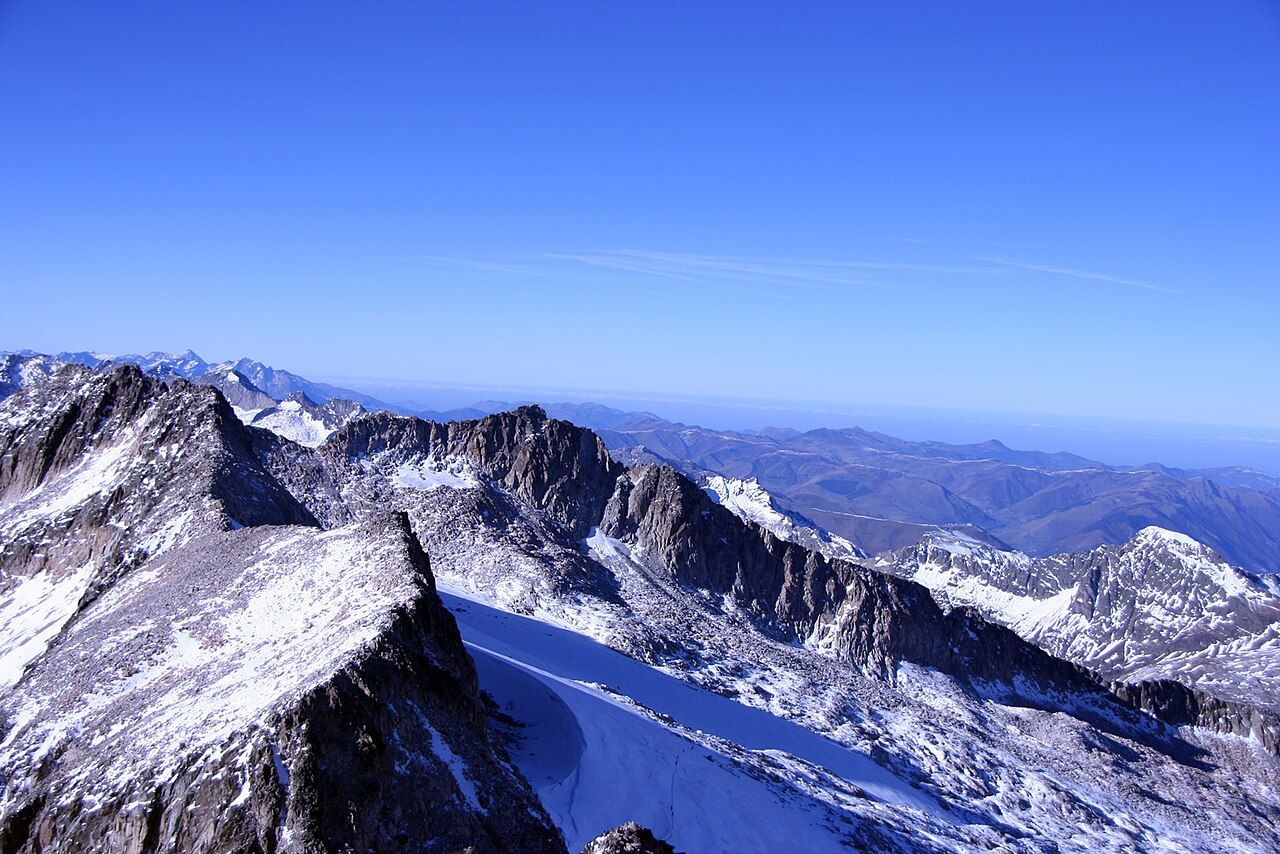
The Renclusa approach
Most ascents start from the Renclusa refuge, which stands at about 2,140 metres on the north side of the massif. You reach it from Benasque by the road up the Ésera valley towards Besurta, then on foot for about an hour. In summer, private vehicles are usually stopped below the end of the road and a shuttle bus takes over.
The refuge is busy in season and reservations are essential on most summer nights. Climbers rise in the dark, eat a quick breakfast and leave with head torches, aiming to be on the glacier while the snow is still frozen hard. A night there also gives you a little time to adjust to the altitude before the long day ahead. The general rules of Pyrenean refuges apply: half-board, shared dormitories, quiet hours and an early start for everyone.
The glacier and the Portillón
From the Renclusa, the normal route climbs over boulders and moraine to the Portillón Superior, a notch in the ridge that leads onto the Aneto glacier. From there the route crosses the glacier, rising steadily towards the Collado de Coronas, a col below the summit block.
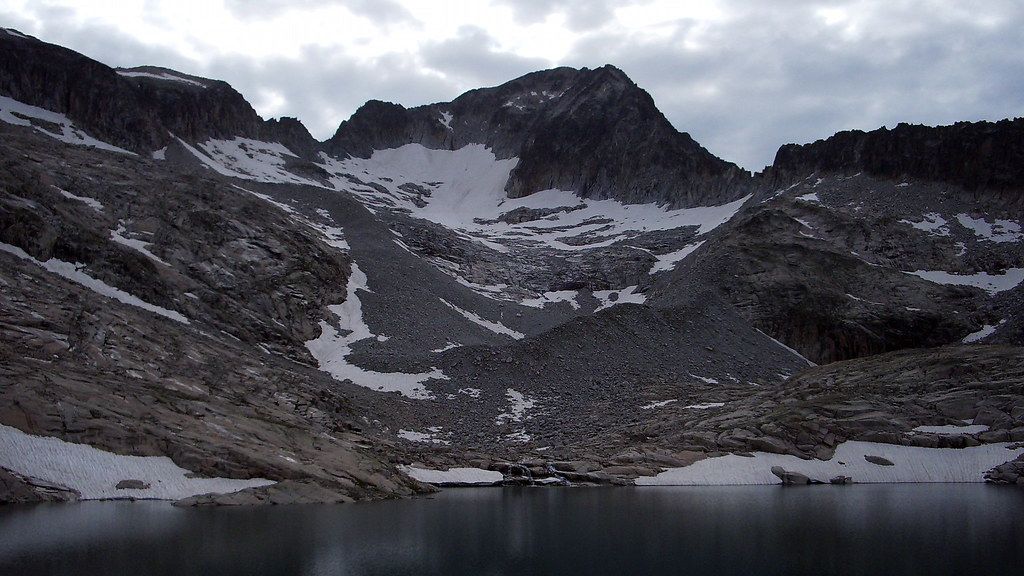
The glacier is the heart of the climb and the main source of danger. Crevasses open on its surface, especially later in the summer when the winter snow has melted and the ice is bare. In early season, snow bridges hide them. Groups rope together, wear crampons and harnesses, and carry ice axes and the equipment for crevasse rescue. Knowing how to use that equipment matters far more than owning it.
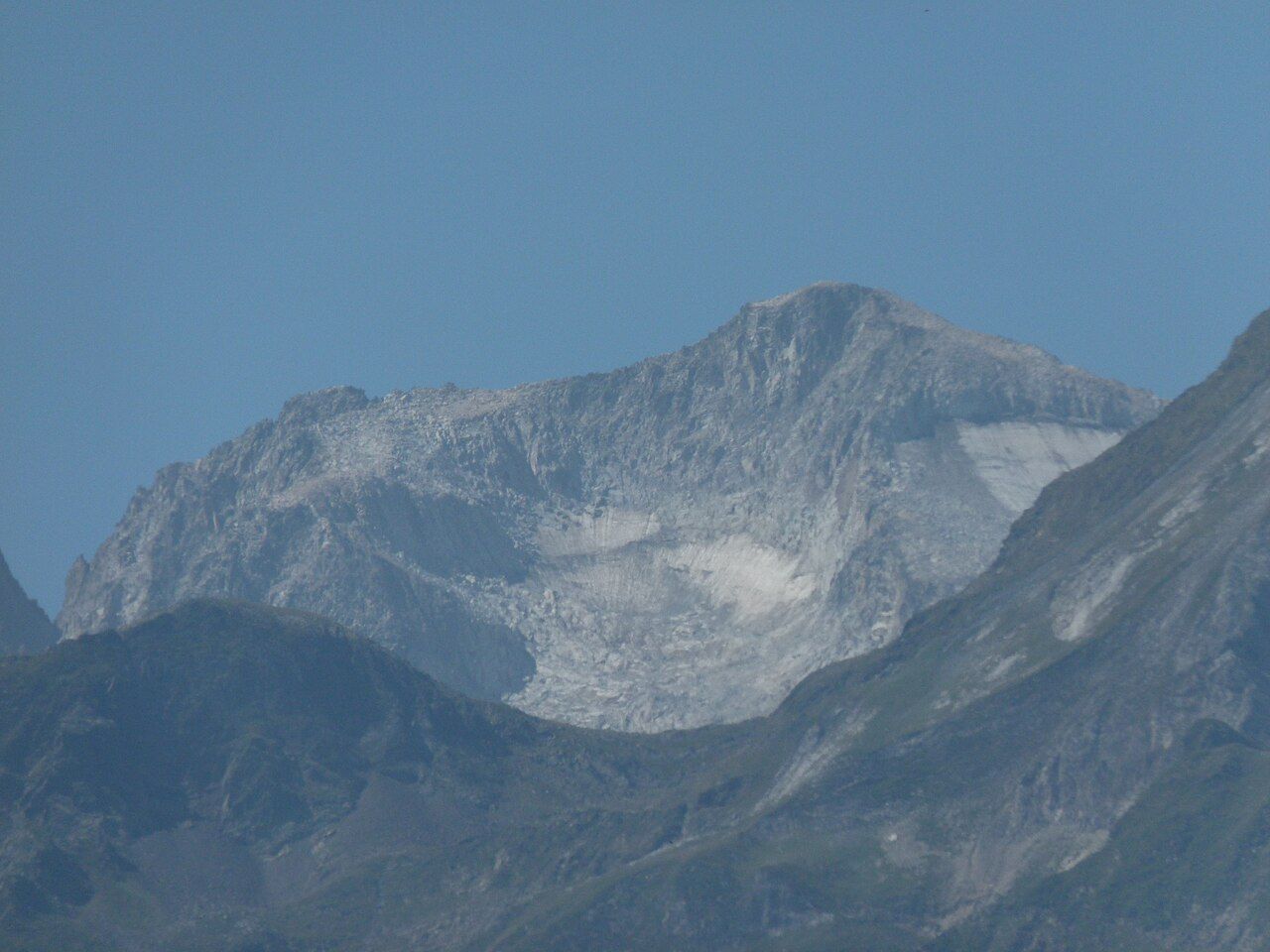
The Aneto glacier is shrinking fast. Like the other Pyrenean glaciers, it has lost much of its area and thickness over recent decades, and scientists expect the remaining ice in the range to disappear within a generation or so. For climbers this changes the route from year to year: more bare ice, more rockfall from newly exposed slopes, and crevasses in places where there were none. Recent conditions matter more than any old route description.
Recent conditions matter more than any old route description.
 Another routeMonte Perdido and the Ordesa canyon
The Mahoma bridge
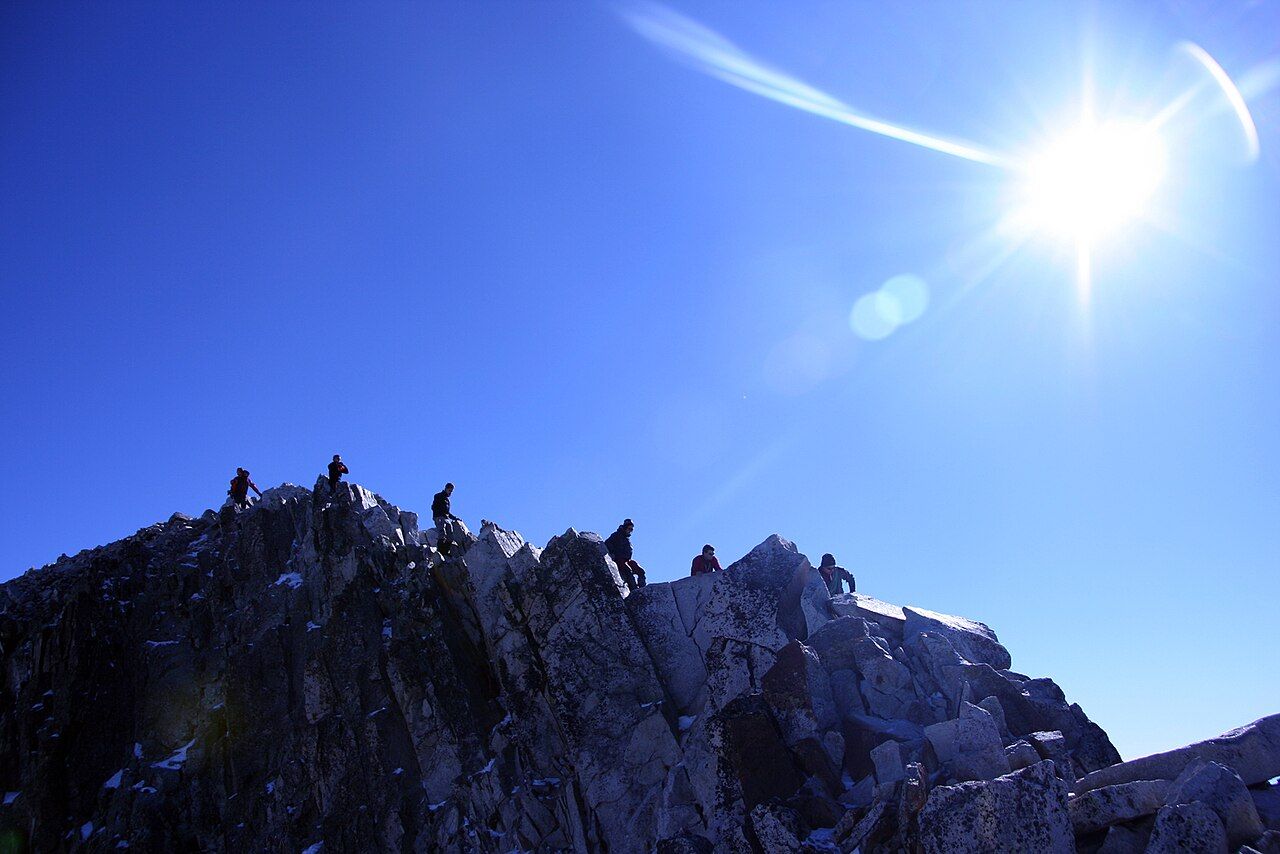
From the Collado de Coronas, a short, steep snow slope leads to the summit ridge. The final section, the Puente de Mahoma, is a narrow crest of large granite blocks with long drops on both sides. It is only a few dozen metres long and the climbing is simple scrambling, but it is very exposed, and in poor weather, with ice on the rock or crowds coming the other way, it becomes slow and nerve-racking.
Many groups leave their axes and some gear at the start of the ridge and cross with care, sometimes protected by a rope. Wear a helmet: stones knocked loose by people above are a constant danger. If the ridge is crowded or the weather is turning, the col below is a sound place to turn around.
From the summit cross, on a clear day, you see much of the central Pyrenees: Posets to the west, the long chain of Pyrenean summits on the border, and down into the Val d'Aran to the north. Aneto is the most famous of the Pyrenean 3,000-metre peaks, and the view helps explain why people return to climb the rest.
Fitness, timing and equipment
From the Renclusa to the summit and back is a long day, often ten hours or more, with well over 1,200 metres of ascent and descent on rough ground. You need to be fit enough to walk steadily uphill for many hours at altitude and still have the attention left for a careful descent. Afternoon thunderstorms are common in summer; plan to be off the summit and on the way down by late morning.
The season usually runs from late June to September, depending on snow. Earlier, the approach is snowbound and avalanche risk is a factor; read the avalanche bulletin in late spring and early summer. Later, the glacier can be icy and crevassed. In any season you need:
- crampons that fit your boots, an ice axe, harness and helmet
- a rope and the skill to use it on a glacier, or a guide who brings both
- warm layers, gloves, a hat, sunglasses and strong sun protection
- a head torch, food, enough water and a map of the massif
Other routes and a quieter side
The Renclusa route is the classic, but not the only way up. From the south, routes climb from the Vallibierna valley, usually with a night at a refuge or a bivouac, and approach the summit from a different side with less glacier but long scree slopes. They are quieter, though no less demanding, and the same need for crampons, axe and helmet applies.
Whichever route you choose, you share the mountain with many others in high summer. Popular weekends bring queues on the Mahoma ridge and crowds on the summit. A midweek ascent, or one early or late in the season when conditions allow, gives you a calmer experience, provided the snow and weather are right.
If the summit is not for you this time, the Renclusa area is worth a visit for its own sake. The walk from Besurta to the refuge and on to viewpoints below the glacier gives a strong sense of the massif and its ice, and the meadows and lakes around the Ésera valley make fine summer walking without a rope.
Going with a guide
For most people the sensible way to climb Aneto is with a qualified mountain guide (IFMGA/UIAGM). A guide chooses the day, sets the pace, ropes the group on the glacier, handles crevasse rescue if needed and judges when to turn back. If you want to climb glaciers on your own in the future, a mountaineering course that covers crampon technique, rope work and crevasse rescue is the right starting point; practise on easier peaks before you come to Aneto.
The avalanche bulletin and weather forecast are worth reading every day before the climb, even in summer. Aneto will still be there next year; turning back is part of climbing it well.