Why the churches matter
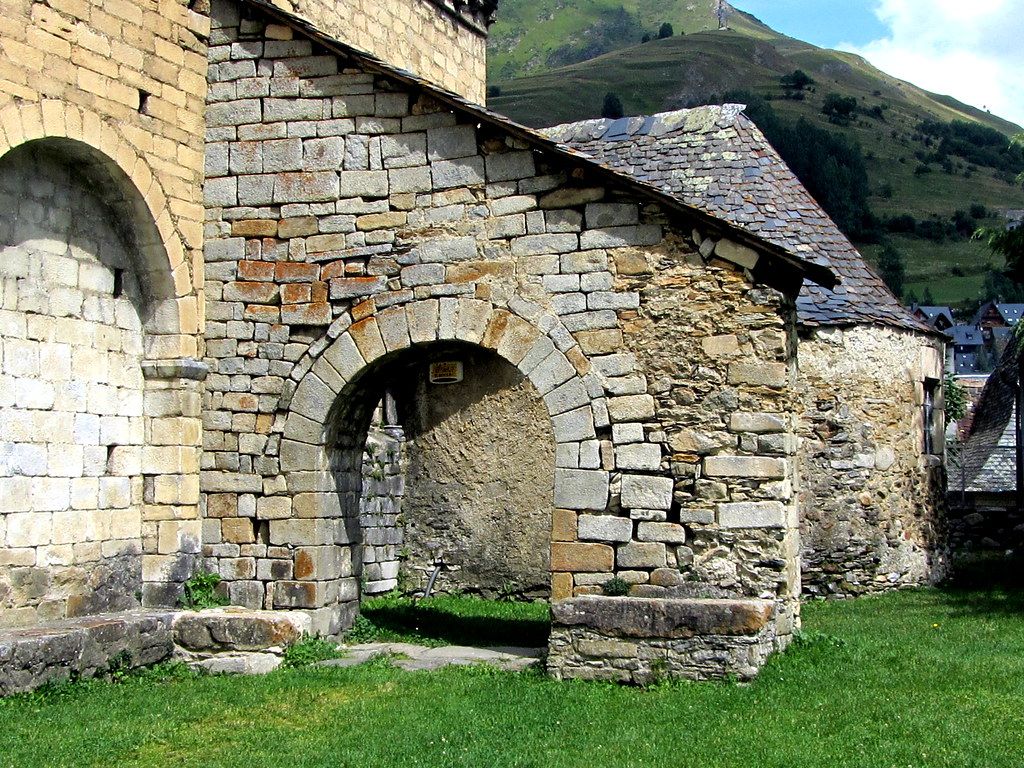
Almost every village in the Val d'Aran gathers around a stone church, and many of those churches go back to the Romanesque period of the 12th and 13th centuries. They are small by the standards of lowland cathedrals, built from local stone with slate roofs and solid bell towers, but they hold some of the finest carving and wall painting in the Pyrenees. Look for the features they share: rounded apses at the east end, small windows set deep in thick walls, portals of stepped arches resting on columns, and rows of carved corbels just below the eaves. Visiting them is the best way to understand how the valley lived for most of its history: isolated in winter, open to France along the river, and proud of its own customs.
The churches also suit the mountain calendar. On a day of low cloud or rain, when the high paths are out of the question, a circuit of three or four villages along the valley floor fills the hours well and gives you a different kind of mountain landscape to read.
Salardú: painted vaults and a wooden Christ
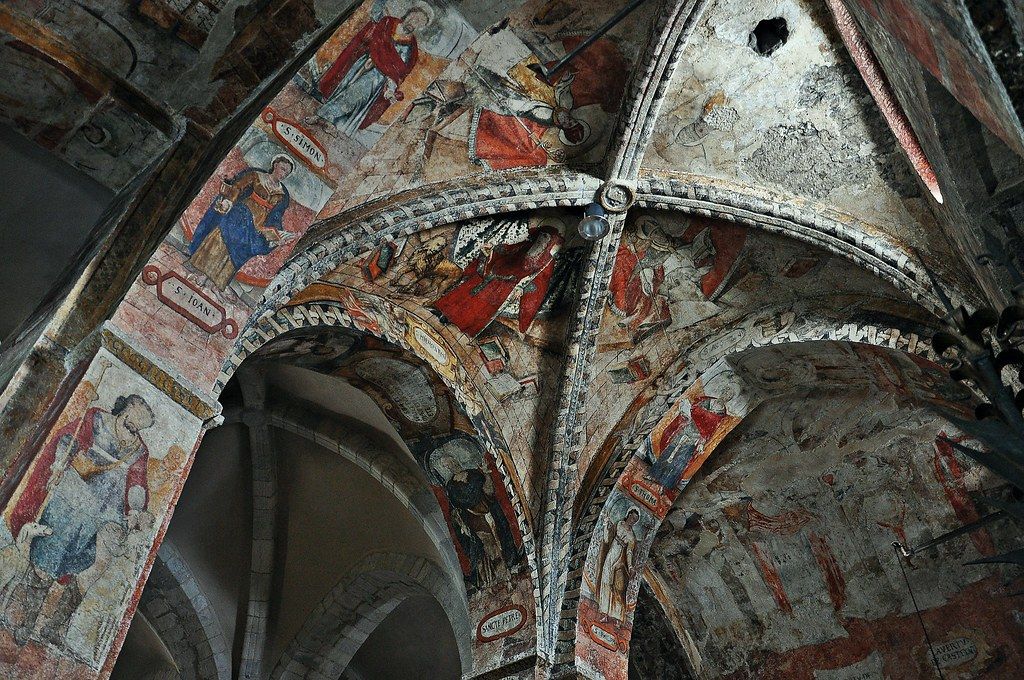
Sant Andreu de Salardú stands above the village on a small rise, inside a walled enclosure with a tall bell tower. The building is Romanesque in origin, with later changes, and its interior is the main draw. The vaults and walls carry painted saints, apostles and scenes from scripture, added long after the church was first built and still bright in places. Labels painted beside the figures give their names, so a slow walk around the nave becomes a gallery visit.
The church also keeps the Christ of Salardú, a carved wooden crucifix from the Romanesque period, one of several wooden Christ figures that survive in the valley. Another, the Christ of Mijaran, is kept in the church of Sant Miquèu in Vielha and survives only in part. Both show the long, calm faces typical of the period rather than the suffering figures of later centuries.
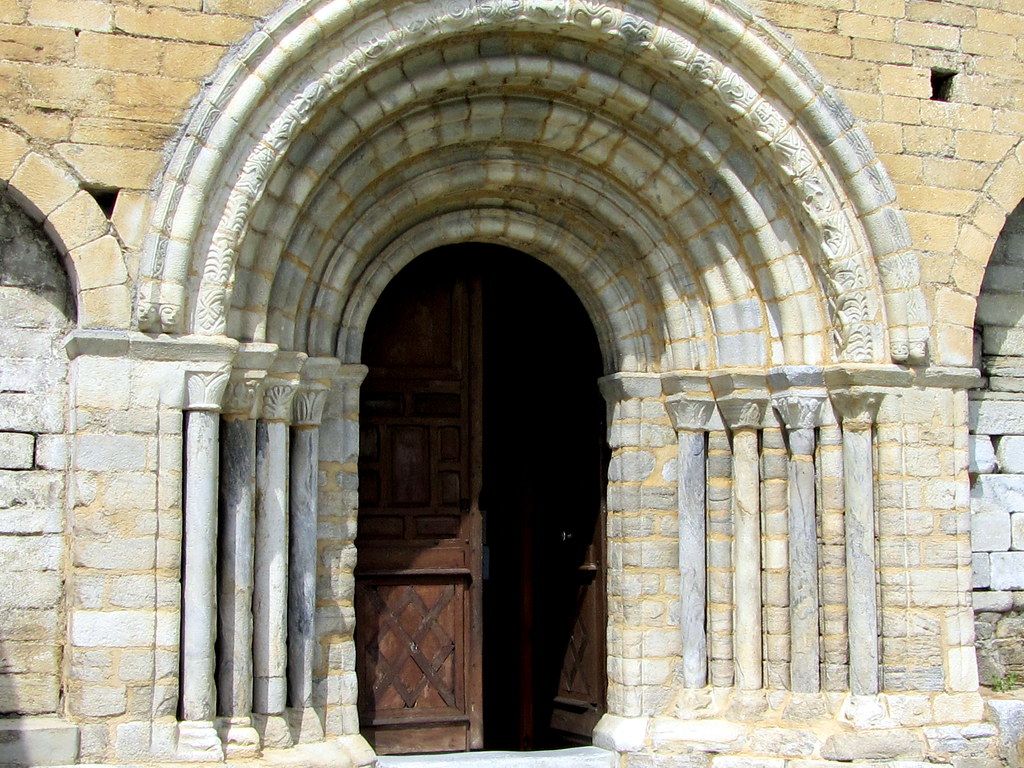
Outside, look at the round-arched portal with its layered columns and carved capitals, and at the stone walls of the enclosure. From the churchyard you get a broad view of the upper valley and the slopes rising towards the Beret plateau.
Arties and Escunhau
Santa Maria d'Arties sits in the middle of the village where two rivers meet. It is a Romanesque church with a solid tower and later wall paintings inside, including scenes of judgement that once served as a lesson for anyone who could not read. Short walks link Arties with Gessa and Salardú upstream, so you can see several churches on foot in a morning.
Lower down, Sant Pere d'Escunhau has one of the most memorable portals in the valley. Carved heads stare out from the capitals beside the door, with geometric patterns and spirals above them. The faces are simple and direct, and they repay a few minutes of close looking in good light.
 Another routeAigüestortes and the Colomers lakes
Bossòst, Unha and Vilamòs
The church at Bossòst, in the lower valley near the French border, is often described as the finest Romanesque building in the Aran. It is a basilica with three naves, larger than most village churches here, and its north door has a carved tympanum showing Christ in majesty. Inside, the proportions and the thick stone columns give it a calm, solid feel.
Santa Eulàlia d'Unha, in a small village above Salardú, keeps painted decoration and a fine portal, and the walk up from Salardú takes only a short time. Look for the rounded apse with its row of small carved corbels under the roof line, a feature you find on several of the valley's churches.
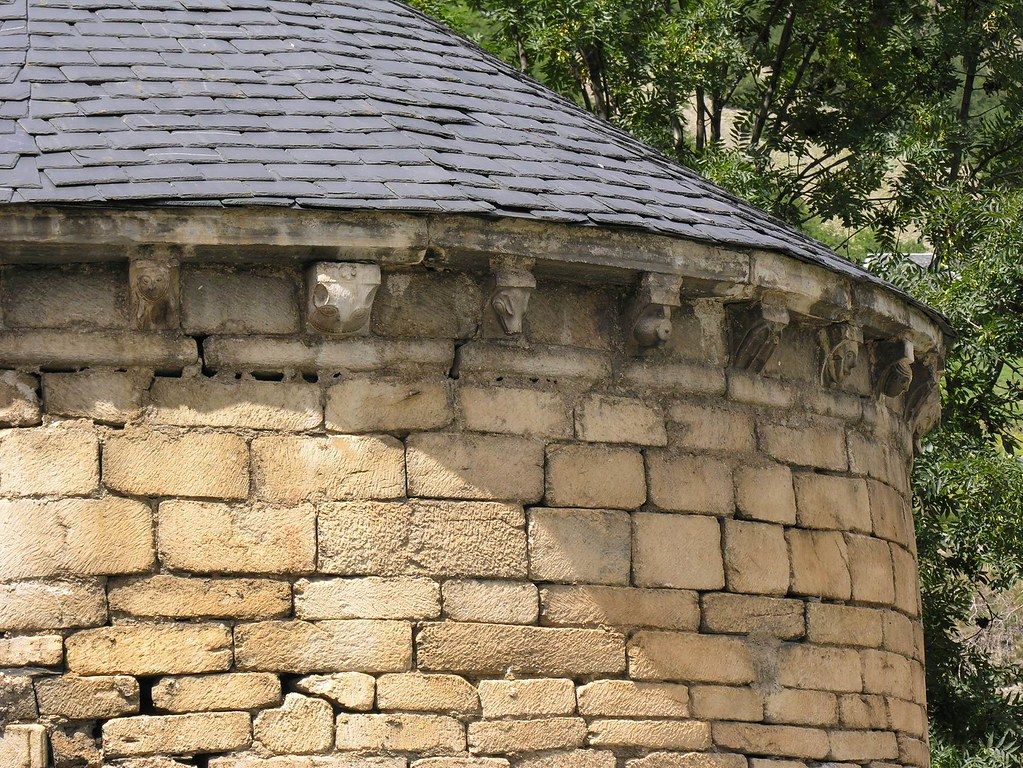
Vilamòs, perched on a hillside above the lower valley, is one of the oldest villages in the Aran and has a small church at its heart. It is worth reaching for the setting alone: a short drive or a steeper walk from the valley road brings you to a balcony with views up and down the Garona.
Opening hours and how to visit
Opening arrangements vary from church to church and season to season. Some are open through the day in summer, some open only for services, and others are shown on visits run locally at set times. Hours are often posted at the church door.
These are working parish churches. Dress modestly, keep your voice down, do not use flash on the paintings, and step back during services. A small torch helps you read the paintings in dim interiors, and binoculars bring capitals and corbels into focus without anyone touching the stone.
Combining churches with a walk
The best way to see the churches is often on foot. Old paths link many of the upper villages, so you can walk from one church to the next across meadows, then return along the river. In winter, when snow covers the paths above the villages, a church circuit by car or bus makes a good rest day between snowshoe outings in the forest. Whatever the season, the churches give you a sense of the people who built and kept them, through long winters in a valley that faced the world on its own terms.