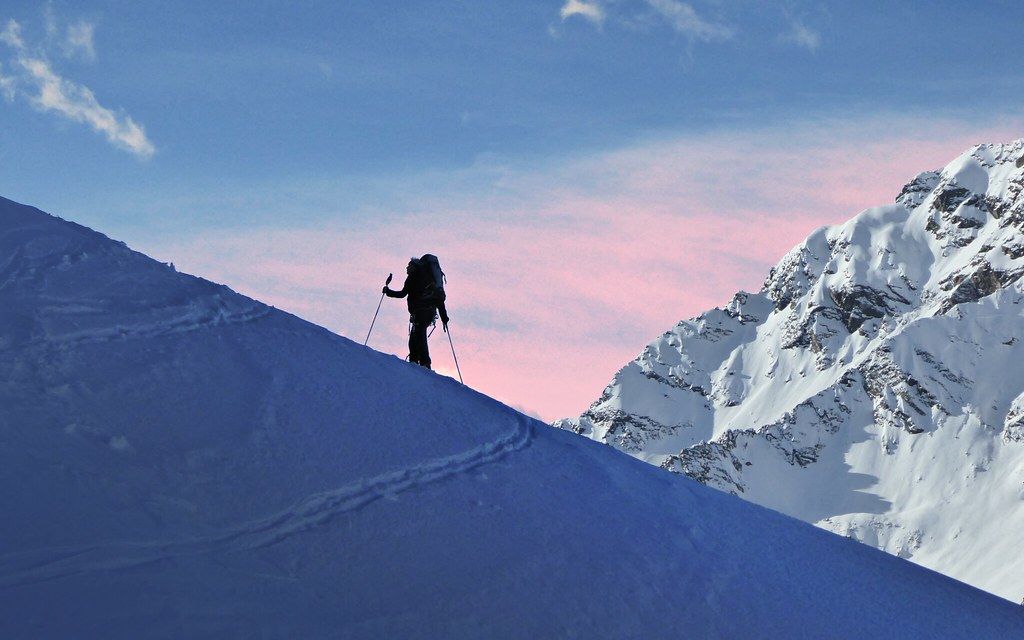
What ski touring is
Ski touring means climbing mountains on skis under your own power, then skiing back down. You stick climbing skins to the bases of your skis, release your heels in special bindings, and walk uphill. At the top, you peel off the skins, lock your heels down and ski. It takes you away from lifts and pistes into quiet, untracked mountains, which is both its great appeal and its main danger.
Touring is not the same as off-piste skiing near the lifts. You go further from help, spend longer in the mountains and cross more varied terrain. That means you need skills beyond good skiing: avalanche knowledge, navigation, fitness and judgement.
The gear: skins, bindings and boots
Touring skis are usually lighter than resort skis. Climbing skins are strips of fabric that grip the snow in one direction, letting you slide forward but not backward. Keep them dry and clean, and practise putting them on and taking them off with gloves in the cold.
Touring bindings let your heel lift freely as you walk, then lock down for the descent. There are different systems, from light pin bindings to heavier frame bindings, each with trade-offs between weight and downhill performance. Touring boots have a walk mode for the climb and stiffen for skiing. Ski crampons, which clip onto the binding, help on hard, icy slopes.
Your boots, skis and bindings must work together. Get them fitted and checked by a specialist, and practise switching between modes before your first tour.
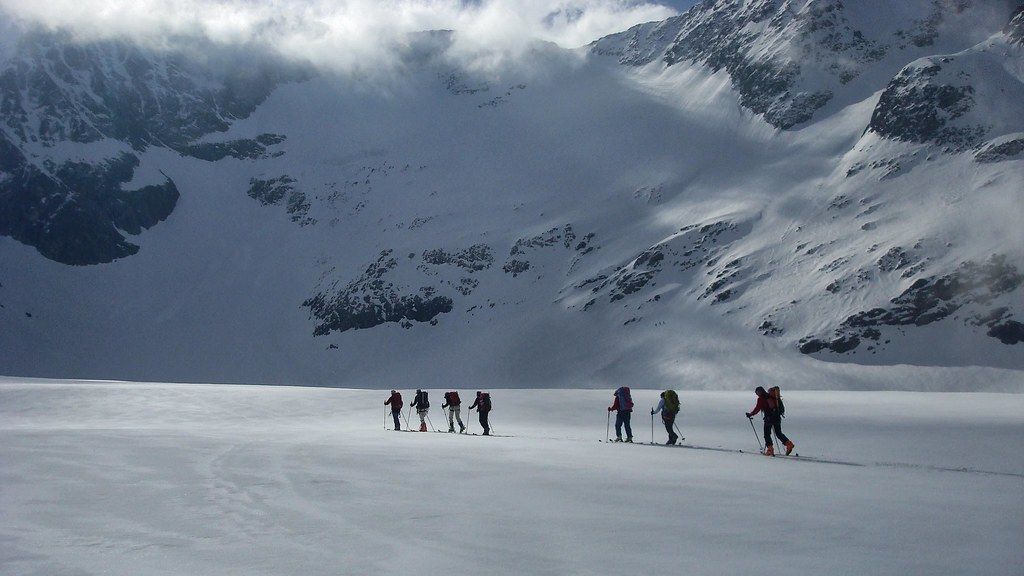
Transceiver, probe and shovel
Every ski tourer carries an avalanche transceiver, a probe and a shovel. The transceiver sends a signal while you tour and can be switched to search mode to find someone buried. The probe pinpoints a buried person, and the shovel digs them out. Together they give your companions a chance to rescue you, and you a chance to rescue them.
This kit only works if everyone carries it, it is switched on and checked at the start of every tour, and everyone knows how to use it. Buried people need to be found and dug out quickly, often within minutes, so practise searching and digging until it becomes routine. Avalanche awareness goes hand in hand with the gear.
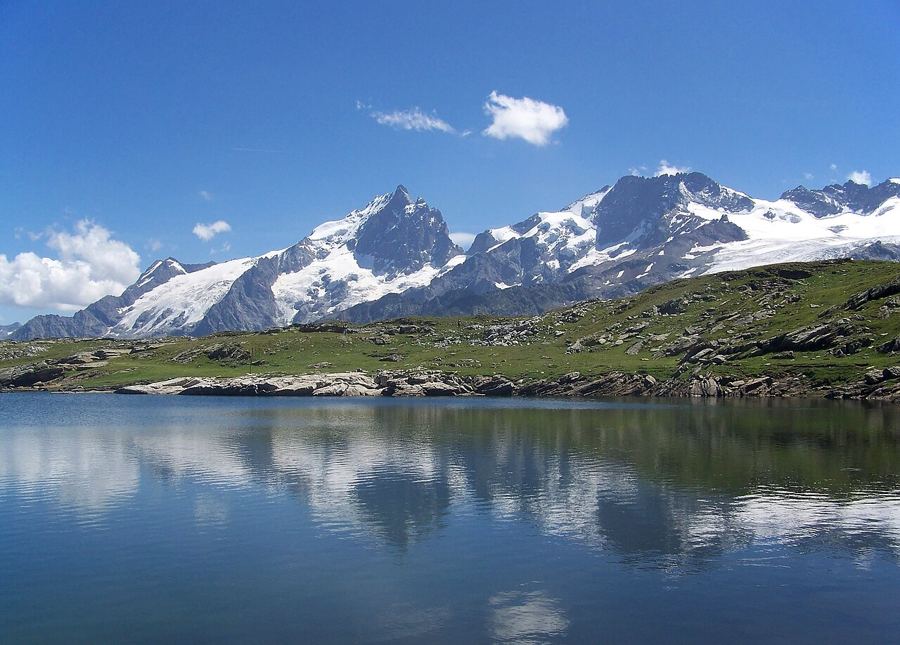 Another routeLa Grave and La Meije
Uphill rhythm
The climb is where most beginners struggle. The secret is a steady, sustainable pace: slow enough that you can talk, with short steps and a smooth glide. Slide your skis forward rather than lifting them. Use the heel raisers on your bindings for steeper slopes, and make your track zigzag rather than going straight up.
Kick turns are the key technique for steep climbs. At each corner of the zigzag, you turn one ski around to face the new direction, then follow with the other. They feel awkward at first, but practice on gentle slopes makes them smooth.
Take short breaks to drink and eat, add or remove layers before you get too hot or cold, and keep an eye on your companions. A group moves at the pace of its slowest member.
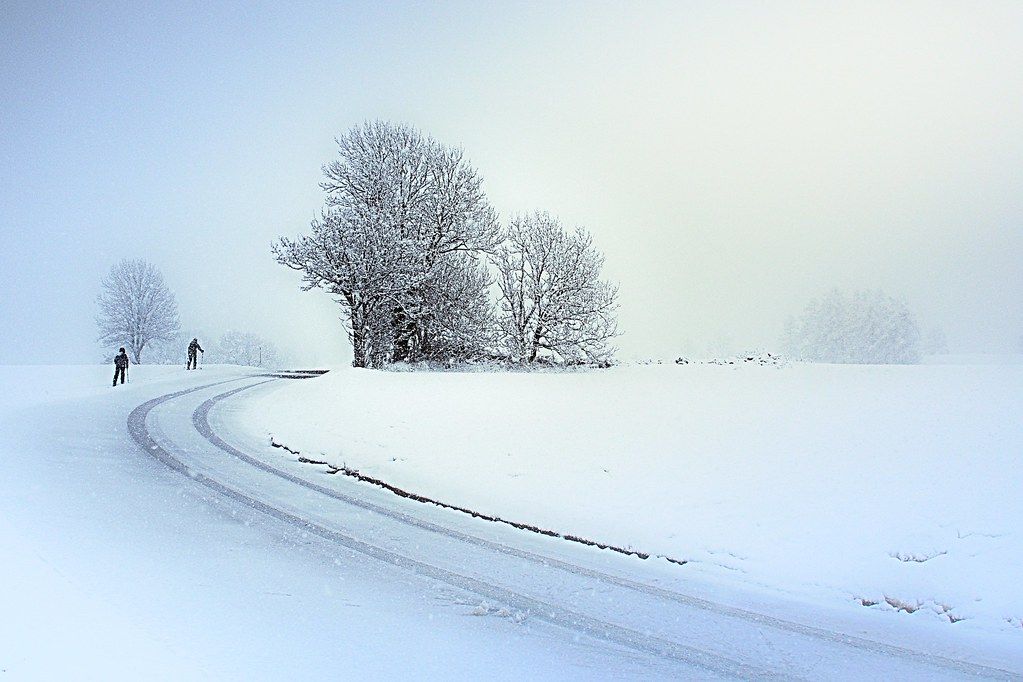
The descent
At the top, find a sheltered spot before you change over. Peel the skins and fold them glue to glue, lock your heels, switch your boots to ski mode and close every buckle. Then eat, drink and put on a warm layer: you will cool down fast on the way down.
Skiing with a pack in untracked snow is different from skiing on a piste. The snow can change from powder to crust to slush on a single slope, and a heavy pack shifts your balance. Ski within your limits, keep turns controlled, and stop in safe places, out of the line of any slope above and away from terrain traps. On suspect slopes, go one at a time while the others watch from a safe spot. Many accidents happen on the descent, when people relax after the climb and ski faster than their judgement can keep up with.
Choosing routes
Your first tours should be short and gentle, with modest climbs, low-angle slopes and simple descents. Avoid slopes steeper than about 30 degrees, and stay away from terrain traps such as gullies and the foot of steep slopes. Read the avalanche bulletin before every tour, and choose routes that suit the danger level and the snow.
Weather matters too. Low cloud or fog can make even familiar terrain confusing, and wind can transport snow and build unstable slabs. Have a plan for turning back, and be willing to use it.
As you gain experience, you can move to longer tours, steeper climbs and more complex terrain. Many people progress over several seasons to multi-day tours and classic routes such as the Haute Route from Chamonix to Zermatt.
Why a course and a guide come first
The safest way to start ski touring is with a course run by a qualified mountain guide (IFMGA/UIAGM) or a recognised mountaineering organisation. A good course teaches you how to use your gear, how to climb efficiently and, above all, how to assess avalanche danger and choose safe routes. Many beginners then go on guided tours for a season or two, learning from experienced eyes before heading out on their own.
If you are not yet comfortable on skis in deep or variable snow, practise off-piste near the lifts with a guide or instructor first. And if you want a gentler introduction to the winter mountains, snowshoeing lets you enjoy the snow while you build your mountain sense.