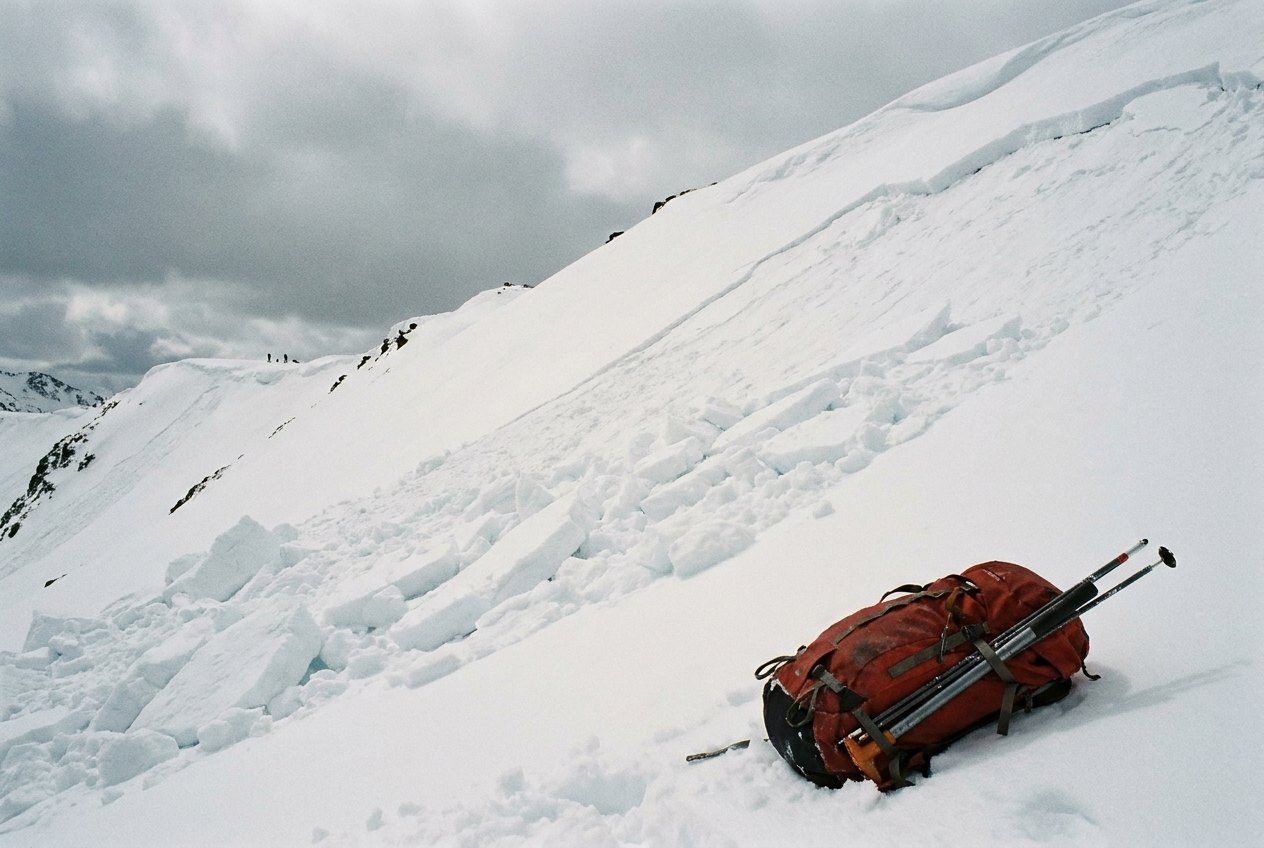
Why avalanche awareness matters
Every winter, avalanches kill people in the Pyrenees and the Alps. Many of them are experienced walkers, snowshoers and skiers who simply did not recognise the danger. In most fatal accidents, the victim or someone in their group triggered the avalanche that caught them. Avalanches are not random acts of nature that strike out of the blue; they happen when people go onto the wrong slope at the wrong time.
That is good news, in a sense: it means much of the risk can be managed. Avalanche awareness is the knowledge and habits that help you avoid dangerous slopes, recognise warning signs and respond if something goes wrong. This guide covers the basics. It is not a substitute for proper training, which is the only way to learn to judge snow and terrain safely.
The daily bulletin and its scale
The first step for any winter outing is the avalanche bulletin. In the Val d'Aran, the valley publishes its own bulletin. In France, Météo-France issues the BRA for each massif. Other regions and countries have their own services. Read the right bulletin for where you are going, every day, before you set out.
Most European bulletins use a five-level danger scale:
- Low: generally stable snow; avalanches are possible mainly on extreme slopes.
- Moderate: unstable snow on some steep slopes; careful route choice is needed.
- Considerable: unstable snow on many steep slopes; human-triggered avalanches are likely.
- High: unstable snow on most steep slopes; natural avalanches are likely.
- Very high: widespread natural avalanches, including large ones.
Bulletins are usually issued daily through the winter season, often in the afternoon or evening for the following day, with a summary of recent snow, weather and avalanche activity. Read the full text, not just the headline number, and note how the danger is expected to change during the day.
The scale is not a simple ladder of safety. Many fatal accidents happen at levels 2 and 3, when people feel confident and go onto steep slopes. Look beyond the number. Bulletins describe the type of avalanche problem, such as fresh wind slabs, weak layers buried deep in the snow, or wet snow in warm weather, and the aspects and altitudes where it is worst.
Look beyond the number.
Slope angle and terrain traps
Slope angle is the single most important factor in where avalanches start. Most slab avalanches begin on slopes of about 30 to 45 degrees. Below about 30 degrees, avalanches rarely start, though they can still run down onto gentle ground from steeper slopes above. Above about 45 degrees, snow tends to sluff off in small amounts rather than building big slabs.
Learn to estimate slope angle. Maps with slope shading help in planning, and a simple inclinometer helps on the ground. With practice, you can recognise the angle by eye, but beginners often underestimate how steep a slope is.
Terrain traps make any avalanche worse. These are places where even a small slide can bury you deeply or push you into danger: gullies and narrow valleys where snow piles up, cliffs below a slope, trees and rocks that cause injuries, and frozen lakes or streams. A slope you could survive in open terrain can be fatal above a trap.
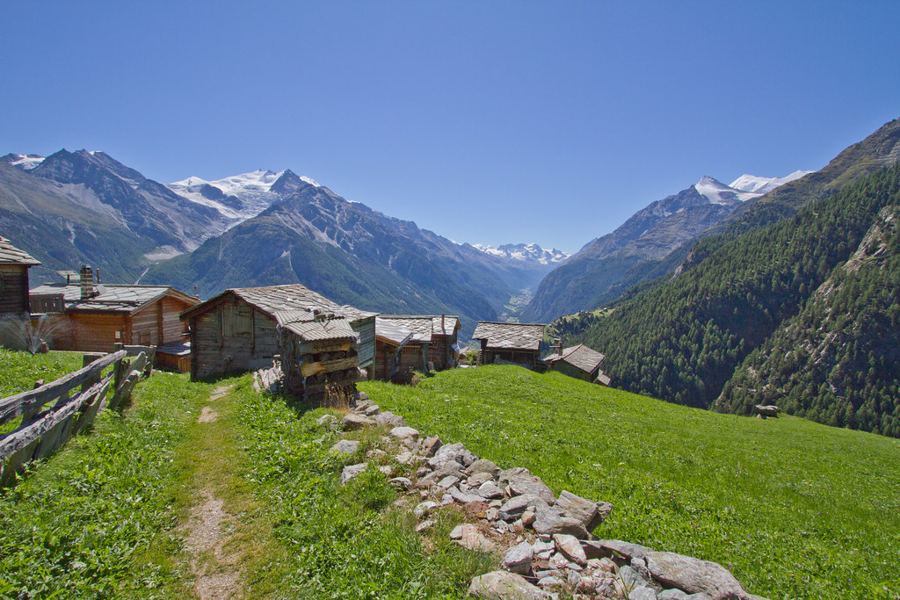 Another routeChamonix to Zermatt, the Haute Route
Even on gentle routes, such as snowshoe walks along valley floors or forest tracks, check what lies above you. Avalanches from steep slopes can run a long way onto flat ground.
Reading the snow and the weather
The mountains give warning signs. Recent avalanches on similar slopes, cracks shooting out from your skis or snowshoes, and "whumpfing" sounds as the snowpack settles under you are all signs of unstable snow. Heavy snowfall, strong winds and rapid warming all increase the danger.
Wind is especially important. It moves snow from one side of a ridge to the other and builds slabs on lee slopes, often just below ridges and cols. These wind slabs can be stiff and look stable while sitting on weak layers underneath.
In spring, the daily cycle of freezing and thawing changes the danger through the day. Slopes that are frozen hard in the morning can become wet and unstable by afternoon. Start early and be off steep sunny slopes before they soften.
The gear and the practice
Everyone in a group going into avalanche terrain should carry an avalanche transceiver, a probe and a shovel. The transceiver sends a signal while you travel and can search for others if someone is buried. The probe pinpoints the victim, and the shovel digs them out. Avalanche airbags can help keep you near the surface, but they do not replace the basic kit or good decisions.
The gear is useless without practice. Survival chances drop quickly after the first minutes of burial, and outside help often arrives too late. Your companions are the rescue team. Check transceivers at the start of every outing, and practise searching, probing and digging until you can do it quickly and calmly. If an avalanche happens, watch where the victim was last seen, call the emergency number (112 in Europe) when you can, and start searching at once.
Ski tourers and off-piste skiers need these skills from the start; the first steps in ski touring include them. Snowshoers and winter walkers in avalanche terrain need them too.
Decisions as a group
Many avalanche accidents involve people who knew enough to see the danger but went ahead anyway. Groups tend to follow the most confident member, to push on towards a goal they have travelled far to reach, or to assume that tracks on a slope mean it is safe. These traps catch experienced people as often as beginners.
Agree on your plan before you leave, including the point where you will turn back. Talk openly at each decision point, and listen to the most cautious voice in the group. Cross suspect slopes one at a time, and wait in safe spots out of the path of any slide. If anyone is uneasy, choose the safer option: the mountain will still be there another day.
Courses and guides
Reading about avalanches is a start, not a qualification. To learn how to judge snow, plan routes and carry out a rescue, take an avalanche course with qualified instructors. Many mountain federations, alpine clubs and mountain guides run them, from short introductions to multi-day courses that include field work in the snow. Repeat your training over the years, because skills fade without practice.
Until you have that training, stay on safe terrain, such as patrolled pistes, low-angle forest tracks and valley floors well away from steep slopes. If you want to explore further, go with a qualified mountain guide (IFMGA/UIAGM) who can manage the risk while you learn. In places such as the Val d'Aran, with its own bulletin and steep winter slopes, that combination of knowledge, gear and humility is what brings people home.