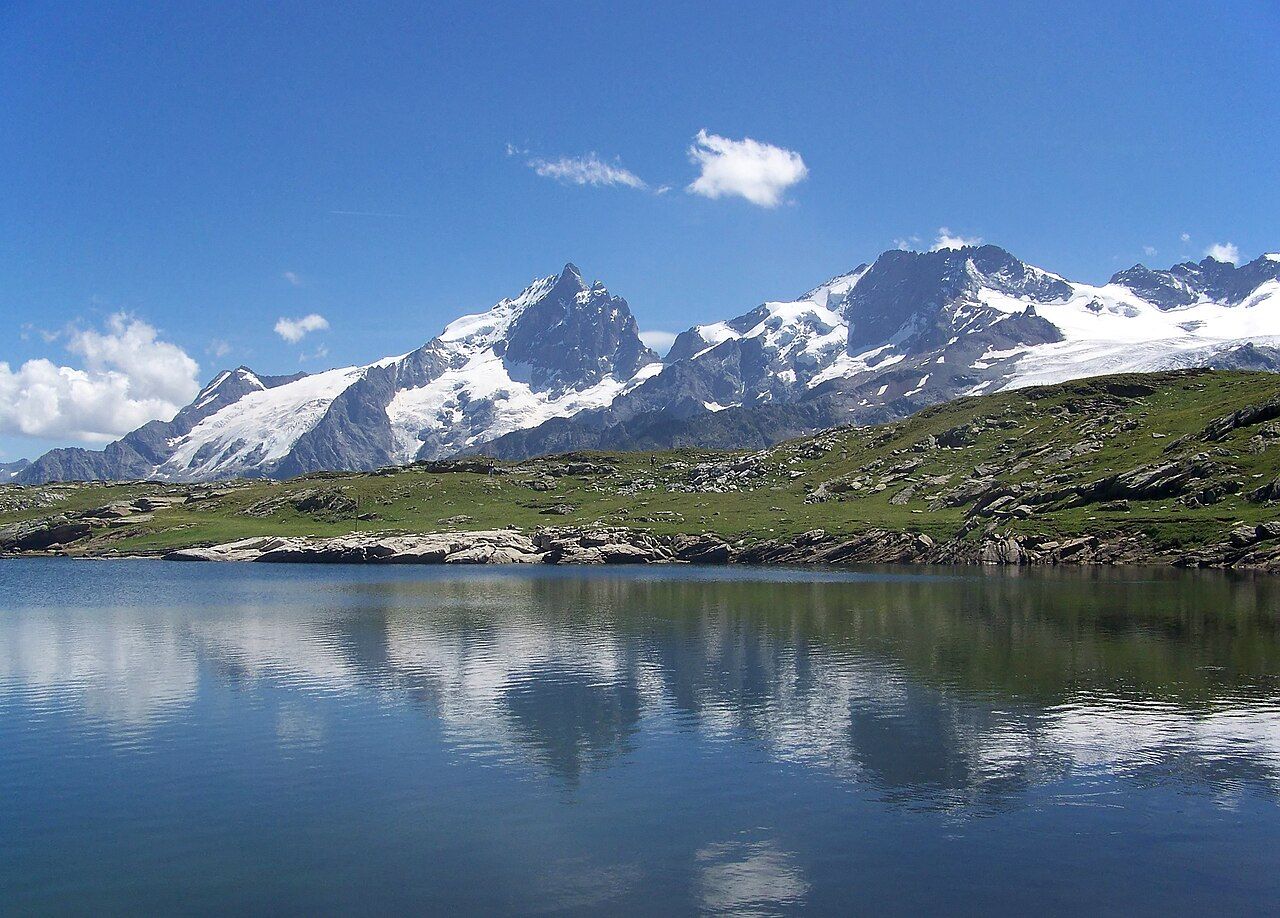
A village under La Meije
La Grave is a small village in the French Hautes-Alpes, on the road between Grenoble and Briançon over the Col du Lautaret. It sits on the north side of the Écrins massif, directly opposite La Meije, a steep, glaciated mountain of about 3,983 metres. La Meije was one of the last great Alpine summits to be climbed, in the late 1870s, and its north face, hung with glaciers, dominates the view from every window in the village.
The village is old and compact, with stone houses, a church and narrow lanes looking across the deep Romanche valley. In winter it is known for one thing above all: a cable car that rises from the village into the high mountains with no pistes at the top.
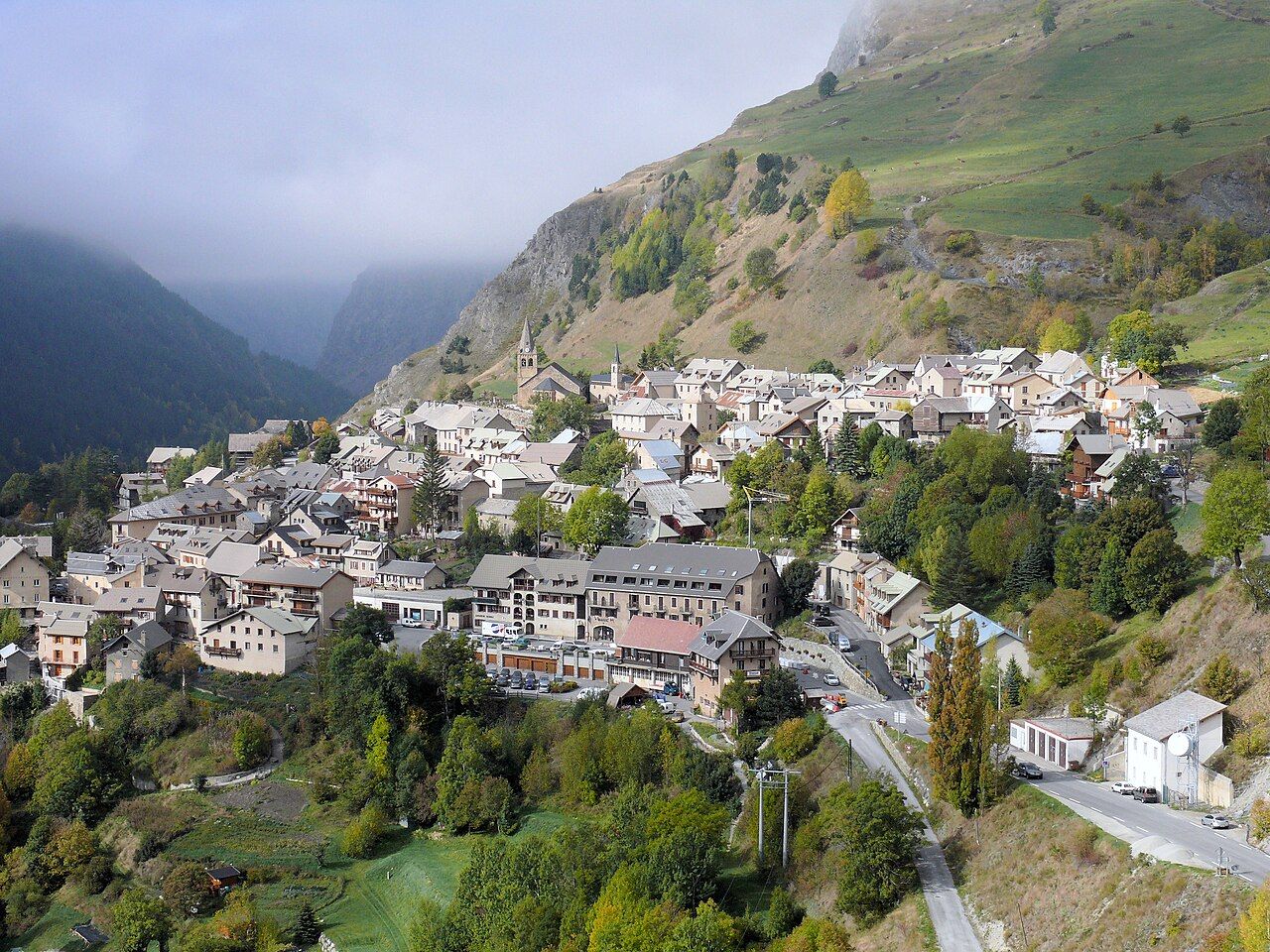
The single cable car
The cable car climbs in stages from the village towards the glaciers below La Meije, reaching around 3,200 metres near the Girose glacier. From the top, there are no groomed runs back to the village, only high-mountain terrain: glaciers, couloirs, rock bands and long descents through forest at the bottom. The terrain is not patrolled or secured the way a ski resort's pistes are, and there are no marked runs.
The lift's operation has been uncertain in recent years, with changes to how it is run and interruptions to its seasons. Opening dates, ticketing and even whether the lift runs at all can change from year to year.
Why it is for experts and guided groups
The terrain below the cable car is high-mountain terrain in every sense. The upper slopes cross glaciers with crevasses, and some routes pass above cliffs where a fall or a wrong turn can be fatal. Avalanches are a constant concern, and conditions change with altitude, aspect and time of day. In poor visibility, finding the right line is difficult even for those who know the area well.
For most visitors, the only sensible way to ski here is with a qualified mountain guide (IFMGA/UIAGM). A guide knows the routes, reads the conditions, chooses where to go and where to avoid, and manages the group on the glacier. Even then, every skier carries an avalanche transceiver, probe and shovel, and often a harness and glacier kit, and must be able to ski steep, variable snow confidently.
If you want to ski here independently, you need solid high-mountain experience: avalanche training, glacier travel and crevasse rescue skills, and many seasons of off-piste skiing. Without that, La Grave is not a place to learn. Start with ski-touring basics and avalanche courses elsewhere, then come back with a guide.
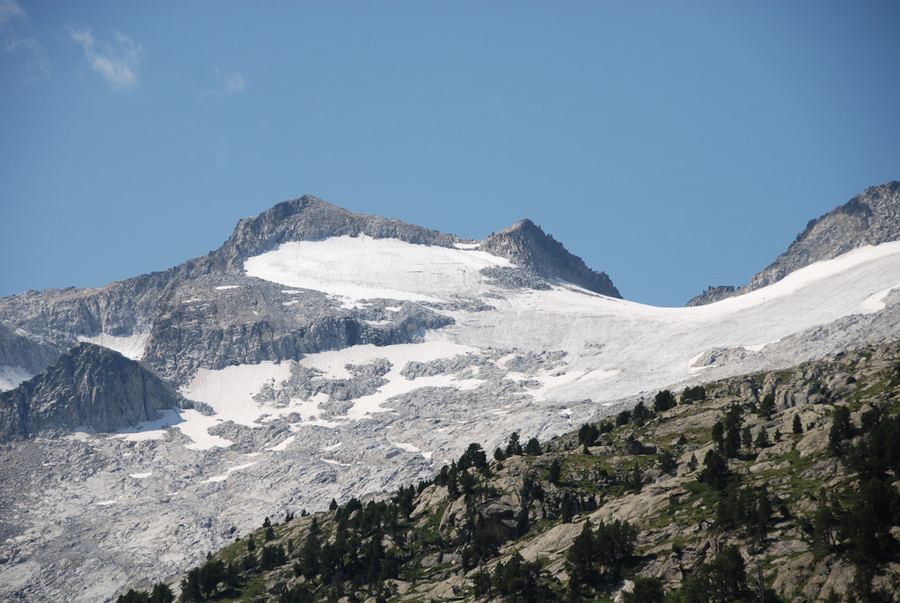 Another routeAneto, the roof of the Pyrenees
Avalanche conditions
Read the Météo-France avalanche bulletin (the BRA) every day before going up, and understand that it describes the general danger over a whole massif, not the safety of a particular slope. Big snowfalls, strong winds and rapid warming all raise the danger, and the steep terrain above La Grave leaves little margin for error. A good grounding in avalanche awareness is the starting point, not the finish.
Spring often brings more stable snow, but also wet-snow avalanches and softening slopes in the afternoon. Early starts and an eye on the temperature matter as much as the forecast.
La Meije in summer
In summer, La Grave becomes a walking base with some of the finest views in the French Alps. The cable car, when it runs in summer, takes you up to glacier viewpoints where you can look across ice and rock at close range. Stay on marked areas near the stations; the glaciers beyond are for roped parties with the right equipment and experience.
The classic summer walks lie on the sunny side of the valley, opposite La Meije. Paths climb from the hamlets above the village to the Plateau d'Emparis, a high, open plateau of pasture and small lakes. From there you see the full north face of La Meije and its glaciers across the valley, often reflected in the water. It is an easy-to-moderate walk, suitable for most fit walkers in good weather.
Climbing La Meije itself is a serious mountaineering undertaking: a long, committing route on rock and ice, usually over two days with a night at a high refuge. It is for experienced alpinists or for climbers with a qualified guide.
Rock, ice and the Écrins
La Grave lies on the edge of the Écrins national park, a wild, high massif of granite and ice to the south. Beyond La Meije, the park holds many more glaciers and 4,000-metre summits, and a network of refuges serves climbers and walkers. Its rules protect wildlife and plants, so dogs, camping and drones are restricted inside the park; read the notices at the trailheads and follow them.
Over the Col du Lautaret
La Grave is reached by road over the Col du Lautaret from Briançon, or from Grenoble through the Romanche valley. The road can close after heavy snow or because of landslides, and travel times vary with conditions. Buses link the village with nearby towns at some times of year.
Whether you come to look at La Meije from the Plateau d'Emparis or to ski beneath it with a guide, La Grave rewards patience and humility. It is a place for the mountains as they are, not as resorts make them. If it sparks an interest in long glacier journeys, the Haute Route from Chamonix to Zermatt is the natural next step, with the same need for training, a guide and respect for the terrain.