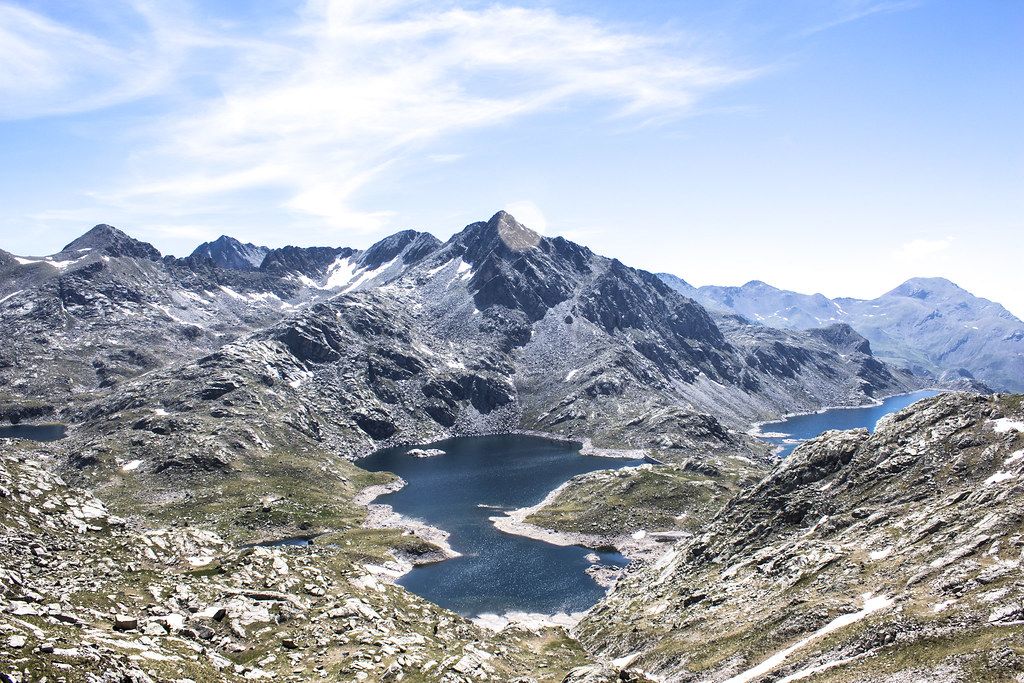
Catalonia's only national park
The Parc Nacional d'Aigüestortes i Estany de Sant Maurici is Catalonia's only national park, a high granite landscape set between the Val d'Aran to the north, the Vall de Boí to the west and the Pallars to the east. Its name joins its two best-known places: Aigüestortes, the "twisted waters" where a stream winds across a flat meadow in the west, and the Estany de Sant Maurici, a large lake beneath the twin rock towers of Els Encantats in the east.
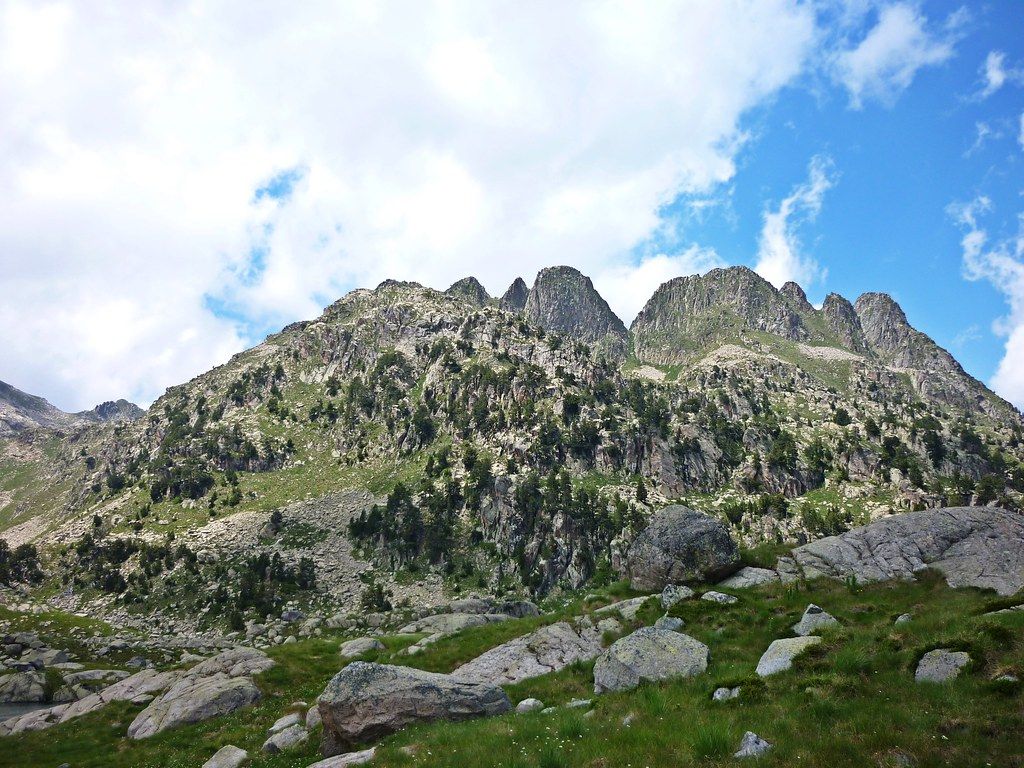
Between them lies country shaped by ice. Glaciers scoured hollows in the granite and left behind a scatter of lakes, many of them strung together by streams and waterfalls. Pine forest fills the lower valleys, giving way to meadows, boulder fields and bare ridges above. In summer the park is busy around its main access points and remarkably quiet once you climb an hour beyond them.
Colomers: the park from the Aran side
From the Val d'Aran, the natural way into this country is through the Colomers cirque. A road and track climb from Salardú and Tredòs up the Aiguamòg valley towards the Banhs de Tredòs, and from there a path rises to the lip of the cirque, where a dam holds back the largest of the Colomers lakes. Access by vehicle on the upper track is regulated in summer, often with a shuttle.
The cirque itself is a bowl of granite ringed by peaks, holding a dozen or so lakes within a few hours of easy-to-moderate walking. A circuit of the lakes is one of the classic days out from the Aran: you pass small tarns, cross streams on stepping stones and climb gently between basins, with the ridge of the park's northern boundary always above you.
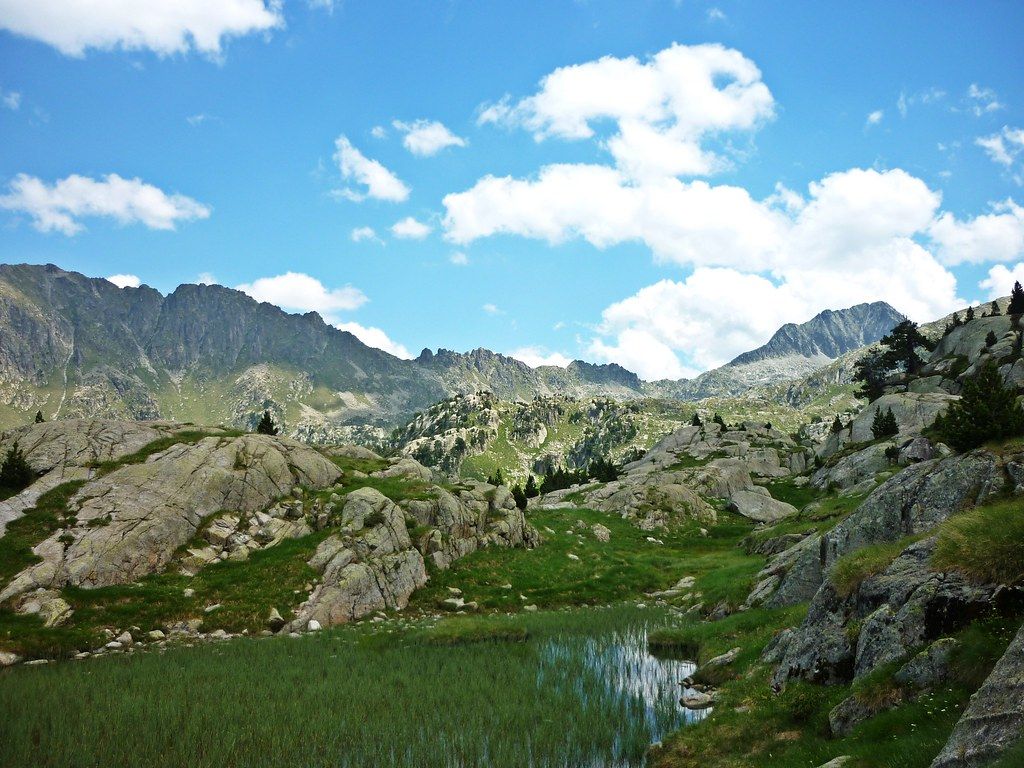
The ground is rough in places, with boulder steps and wet meadows, but on a fine summer day the circuit suits any fit walker with good boots. Keep to the marked paths around the shores, which are fragile, and remember that some of the cols above the cirque lead into far more serious terrain.
Sant Maurici and Els Encantats
On the eastern side, the village of Espot leads up to the Estany de Sant Maurici. The lake sits in a forested basin, and above it rise Els Encantats, two rock pinnacles that dominate the view and appear on countless postcards. A path runs along the shore, and from the lake you can walk up to higher basins such as the Amitges or Ratera lakes, each a short climb from the next.
To the west, the Aigüestortes meadow near Boí offers flat walking beside meandering streams under pine-covered slopes, and the Estany Llong lies a little higher up the valley. The walk across the park from one side to the other, over the Portarró d'Espot, links the two halves and gives you a full day in the high country.
 Another routeThe Pyrenean 3,000-metre peaks
Private cars cannot drive deep into the park. Regulated four-wheel-drive taxis run from Espot and Boí to the edge of the main lakes in season, and park information centres in the access villages explain the current rules.
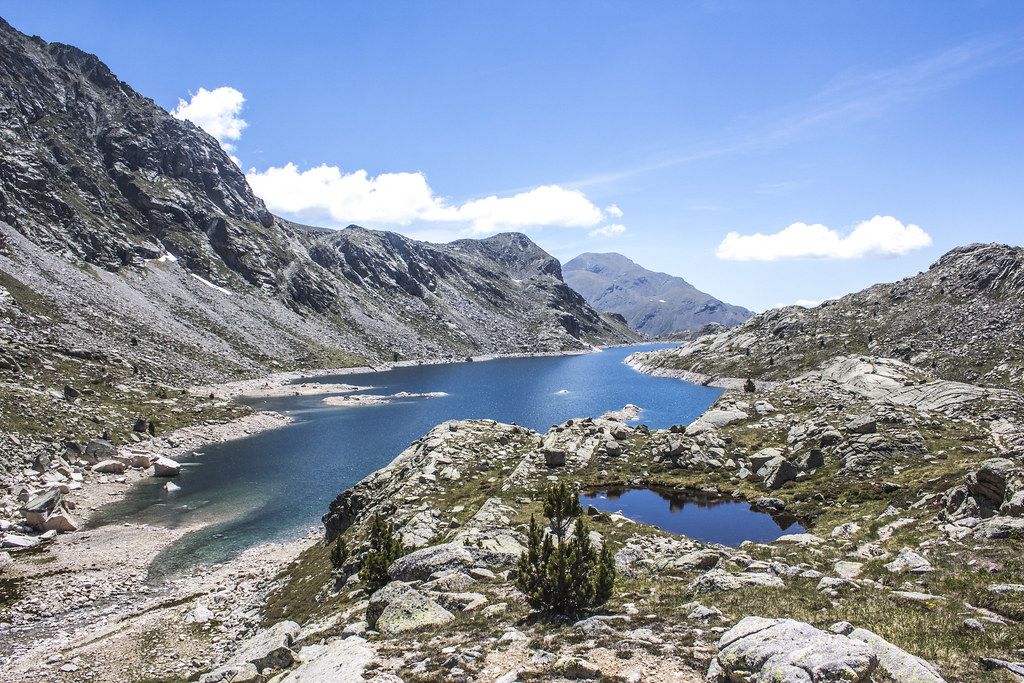
Lake walks for every level
The park rewards walkers of almost any experience, as long as you match the walk to your fitness and the weather. Short outings along the main lake shores take a couple of hours and stay below the tree line. Longer days climb from one basin to the next and cross cols at well over 2,000 metres, where the path may be little more than paint marks on boulders.
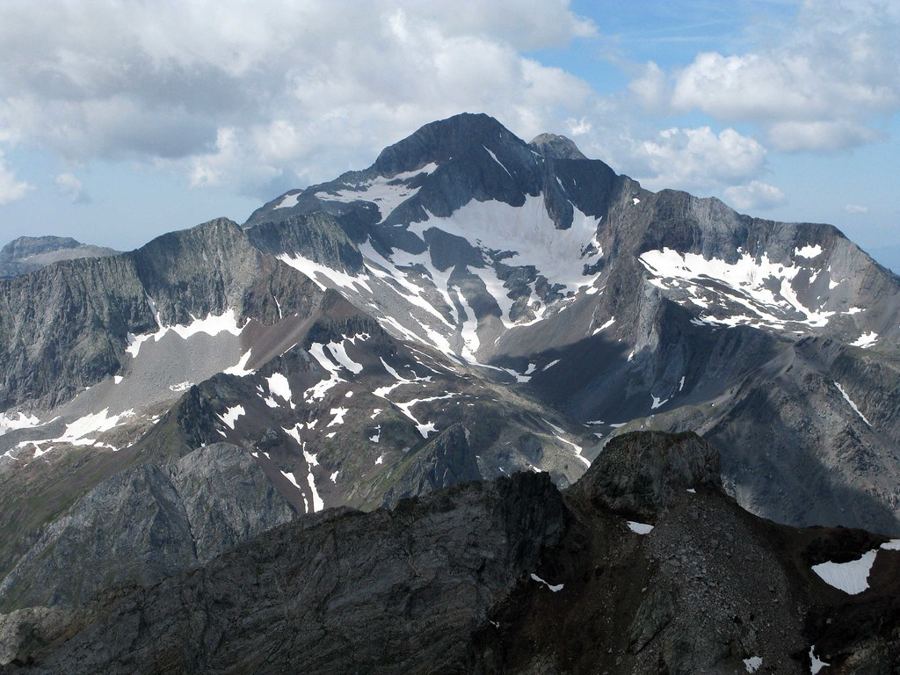
Above the lakes, the park is ringed by summits, including several that clear 3,000 metres, but these are a different undertaking. Steep scree, loose rock and lingering snow make them suitable only for experienced mountaineers or those with a qualified guide. Early in the season, old snow can lie on north-facing slopes and in gullies well into July; a slip on hard snow without an ice axe and the skill to use it can be serious.
The biggest hazard in summer is weather. Clear mornings often turn to cloud and thunderstorms by early afternoon, and on open granite there is little shelter. Lightning is a real danger on ridges and cols. Start at first light, keep an eye on building cloud, and be willing to turn back before the storm arrives.
Start at first light, keep an eye on building cloud, and be willing to turn back before the storm arrives.
Refuges and multi-day routes
Several staffed refuges sit inside and around the park, including one at the Colomers lakes on the Aran side, and others near Sant Maurici, Estany Llong and the Restanca and Ventosa lakes. They make it possible to string together multi-day traverses, the best known being a circular route that links a ring of refuges around the park. Staying in them follows the general rules of Pyrenean refuges: reserve ahead in summer, expect shared dormitories and simple half-board, and carry a sleeping liner.
Opening dates, reservation systems and prices vary from refuge to refuge, and some close outside the main season or keep only a small unguarded room open. Let the refuge know if your plans change so that a bed is not wasted on a busy night.
In winter the park changes character completely. The lakes freeze, snow covers the paths and avalanche danger becomes the main concern. Easy forest outings near the access villages can suit snowshoes, but anything higher needs avalanche training and equipment, or a qualified mountain guide.
Wildlife and seasons
Summer brings the park to life. Meadows flower in July, marmots whistle from boulder fields, and chamois move across the higher slopes, often seen best in the early morning. Black pines and mountain pines grow up to the tree line, and in the forests below you may hear woodpeckers. Keep your distance from animals, carry binoculars, and stay quiet if you want to see more than the backs of departing chamois.
Autumn is a fine time to visit too. The crowds thin after early September, the light is clear and the larches and birches turn gold along the lower valleys. Days are shorter and nights colder, and some refuges and taxi services reduce their timetables or close.
Looking after the park
The park's rules exist because the lakes, meadows and wildlife are easily damaged. Camping and fires are restricted, dogs and drones are controlled, and you carry out everything you bring in. Stay on the marked paths, do not build cairns or move stones, and keep away from grazing animals and nesting birds. Leave the lakes as you found them, and the park will be as quiet and clear for the next walker as it was for you.